
Electric Motorcycle Lithium Battery
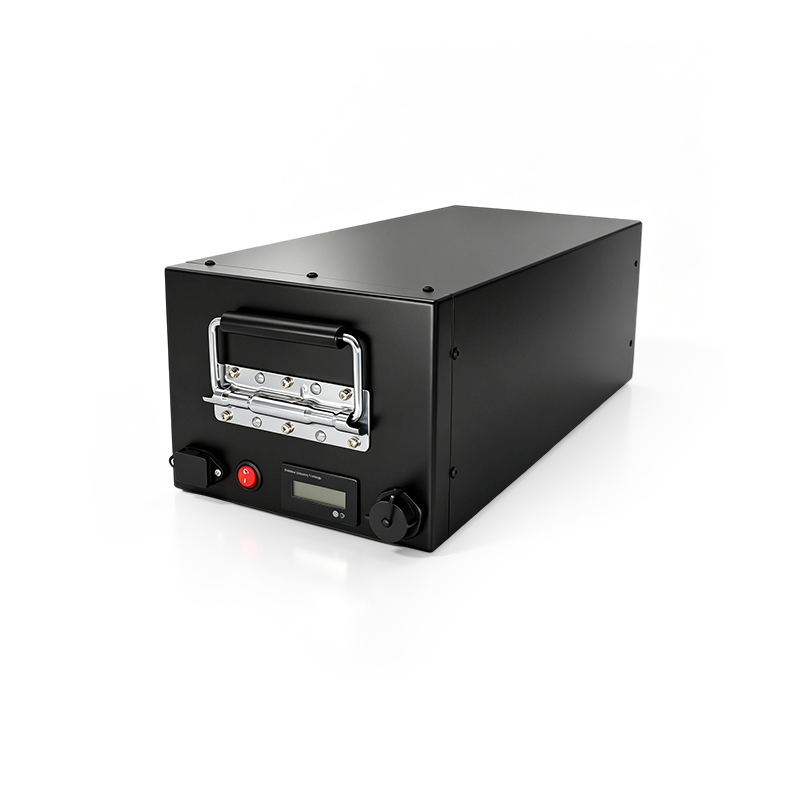

-
Full Powertrain Overhaul: Break Through Single Battery Upgrade Limits to Boost Golf Cart Comprehensive Capability
+In the global golf cart aftermarket, lithium iron phosphate batteries have gradually replaced traditional lead-acid batteries as the mainstream upgrade choice. Many operators only replace batteries and supporting chargers to gain longer range and lower maintenance expenses, yet this partial upgrade has obvious bottlenecks. Original factory motors and controllers are calibrated for lead-acid low-current discharge, which cannot release lithium batteries’ instant high-current advantage. When climbing slopes or carrying heavy passengers, power attenuation, slow acceleration and insufficient load capacity frequently occur. Separately purchased scattered parts also bring compatibility mismatches, tedious wiring installation and frequent breakdowns.
As a professional supplier of low-speed vehicle integrated power systems, EVMAX focuses on solving fragmented refitting pain points and launches all-matching full golf cart power packages integrating lithium battery, dual-in-one motor controller, intelligent waterproof charger and electromagnetic braking rear axle. Unlike discrete component upgrades, our whole system undergoes unified matching calibration to realize coordinated performance among all parts, comprehensively improving energy utilization, power responsiveness, driving range and intelligent management level.
The lithium battery pack adopts stable high-current output design, supporting 3,200 deep charge-discharge cycles and 8-year comprehensive warranty. The matched smart charger reaches IP67 dustproof and waterproof standard, with overcharge, over-discharge, short-circuit and anti-creep safety protection. Bluetooth mobile App enables real-time remote monitoring of battery voltage, remaining capacity and charging status, facilitating daily vehicle inspection and maintenance.
Three types of motor-controller combinations cover all application demands. Lightweight integrated BL series realizes plug-and-play one-person installation; high-torque BA series adopts fully sealed waterproof structure for resorts and hilly courses; split FL series matches large six-seat sightseeing carts for heavy-load continuous operation.
Field refitting tests on EZGO, Club Car and Yamaha models prove that the integrated dual-in-one drive unit shortens overall replacement time to about 10 minutes, removing redundant wire harnesses to lower wiring failure risks. The hybrid excitation synchronous motor raises overall efficiency, increasing single-charge mileage by nearly 15% and bearing an extra 20kg cargo load with remarkable climbing performance improvement. The supporting App pushes early warning signals for potential faults to realize predictive maintenance and reduce fleet operation loss.
Going forward, EVMAX will continue optimizing integrated power system technology, delivering systematic, reliable and high-efficiency upgrade solutions to help golf course and resort operators achieve smarter, more stable vehicle operation.
-
The Complete Guide to LiFePO4 Sightseeing Vehicle Batteries for Resort, Park & Campus Fleets
+Your electric sightseeing shuttle should deliver stable power all day long, yet most park operators still rely on bulky lead-acid batteries. These batteries suffer power drops on hilly roads, require weekly fluid refills, and need full replacement every 2–4 years. LiFePO4 sightseeing batteries solve all these pain points, with a service life up to 10 years, 70% lighter weight and 2–4 hours fast charging. This guide compares lithium and lead-acid, teaches voltage & capacity selection, and covers mainstream vehicle compatibility, charging norms and built-in BMS protection.

LiFePO4 outperforms lead-acid in every core index. Lead-acid only supports 300–500 charge cycles, takes 8–10 hours to charge, and weighs over 300 lbs for a 48V pack. Operators must regularly add distilled water and clean corroded terminals. Worse, voltage declines sharply as power drains, making climbing slow in the afternoon peak hours. In contrast, lithium iron phosphate boasts 2,000–4,000+ cycles, zero maintenance, and constant voltage output until nearly empty. Its lightweight design reduces vehicle load, eases motor wear and protects scenic turf.
Though lithium carries a higher upfront cost ($1,500–$3,000 vs lead-acid’s $600–$1,500), the 10-year total cost is far lower. Lead-acid fleets need 2–3 full replacements within a decade plus continuous maintenance fees, pushing total spending above $2,500. Lithium packs rarely need replacement, cutting long-term operating expenses drastically.
When purchasing, match your shuttle’s original voltage first: 36V for old 4-seat light carts, 48V as the universal mainstream model for 6–8 seat sightseeing vehicles, and 72V for heavy-duty 14-seat commercial fleets. For capacity, 80–100Ah fits casual low-traffic parks; 105Ah balances daily round trips and hilly terrain as the best all-around pick; 160Ah+ suits full-day resort operation with audio and lighting accessories.
All mainstream sightseeing vehicle brands support plug-and-play lithium upgrades. The intelligent built-in BMS acts as the battery’s core control system, realizing overcharge, over-discharge, short-circuit and temperature protection, plus automatic cell balancing. Premium models support Bluetooth real-time monitoring via mobile phones.
To extend battery life, charge after daily operation and avoid deep discharge below 20%. Use special lithium chargers and stop charging under 0°C. Store batteries at 50%–70% power if the vehicle sits idle for weeks. Equipped with automotive-grade LiFePO4 cells and smart BMS, GemRexs POWER sightseeing batteries are ideal for resorts, campuses and scenic spot fleets, bringing stable power and long-term cost savings.
-
EZGO Lithium Conversion Guide: Everything You Need Before You Upgrade
+Most EZGO owners overlook that their carts are perfectly primed for lithium battery retrofits. Battery compartments fit neatly, voltage systems align well, and the only barriers to a seamless upgrade are matching your cart model and avoiding hidden electrical pitfalls. This guide covers all critical details to help you convert confidently without overspending or buying incompatible battery packs.
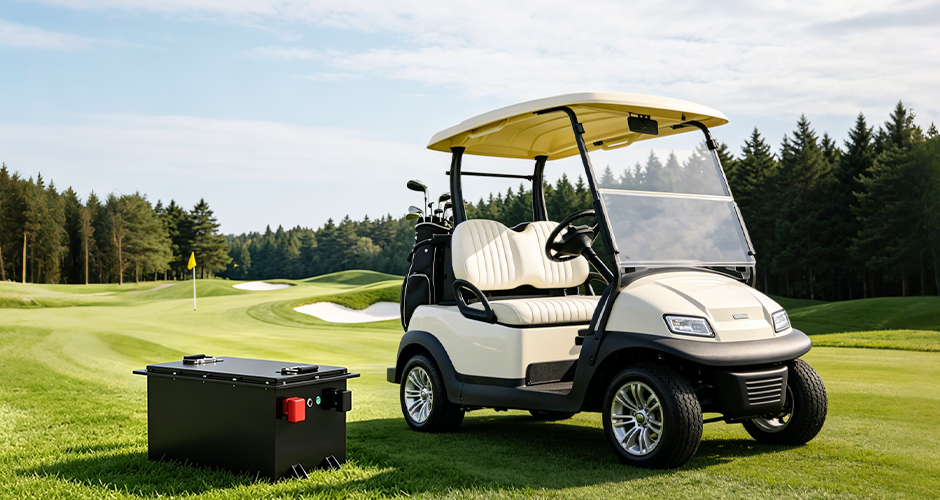
Lead-acid batteries have long plagued EZGO users with weekly water top-ups, corroded terminals, mid-round power sag, and mandatory full replacements every 2–3 years. LiFePO4 lithium batteries outperform them across every core metric. A 48V lead-acid pack weighs 250–300 lbs, while lithium cuts this down to 55–70 lbs, slashing nearly 200 lbs of dead weight for snappier acceleration, less motor strain and extended driving range. Lithium lasts 8–10 years with 3,000–5,000 charge cycles, versus just 300–800 cycles for lead-acid. It charges fully in 2–4 hours, requires zero routine maintenance, and delivers steady flat voltage until nearly drained—no sluggish performance on the back nine.
Model & Voltage Compatibility
EZGO’s lineup splits into 36V and 48V platforms, which dictates your lithium pack choice. Older pre-2000 TXT carts run on 36V with six 6V lead-acid cells, easily swapped with one drop-in 36V lithium unit. All post-2000 TXT, RXV and S4 models adopt a 48V system. RXV carts come with an On-Board Computer (OBC) designed exclusively for lead-acid charging; an OBC bypass harness is mandatory for lithium installs to prevent charging conflicts. Post-2018 RXV and S4 variants factory-fitted with lithium rely on CAN-bus communication. Generic lithium batteries lack compatible BMS chips, triggering faulty dash readings, error codes or limited power output. Always check your cart’s serial number near the glove box to confirm model year and voltage before purchasing.
For capacity selection: 80–100Ah suits casual weekend golfers on flat terrain; 105Ah is the universal sweet spot with 30–40 miles per charge on moderate courses; 160Ah+ works for commercial fleets, hilly layouts or carts loaded with audio, lights and other accessories.
Step-by-Step Conversion Overview
Confirm system voltage by counting lead-acid batteries to match your lithium pack.
Purchase a complete kit including LiFePO4 battery, lithium-specific charger, OBC bypass wiring, mounting hardware and state-of-charge gauge. Never reuse old lead-acid chargers—their equalization cycle will permanently damage lithium cells.
Disconnect negative terminals first, safely remove heavy lead-acid batteries and recycle them professionally.
Trim internal plastic dividers in the battery tray for a flat lithium mounting surface and clean away corrosion.
Secure the lithium pack, double-check positive/negative polarity and install the OBC bypass harness to redirect charging control to the battery’s built-in BMS.
Fit the dedicated lithium charger, fully charge the pack, then test dash readouts, motor power and driving range.
Long-Term Cost Breakdown
Lithium kits cost $1,500–$3,000 upfront, while lead-acid sets range $800–$1,500. Over a decade, lead-acid carts need 2–3 full battery replacements plus ongoing maintenance, totaling $3,000–$6,000. Lithium only requires one battery plus a one-time $200–$400 lithium charger, with total 10-year costs between $1,700 and $3,400. Regular users break even within 3–5 years. Additionally, lithium-converted EZGO carts hold far higher resale value, as buyers actively avoid the hassle of lead-acid upkeep.
Critical CAN-Bus Note
Analog older EZGO models need only an OBC bypass, but post-2018 factory-lithium EZGO carts depend on CAN-bus data exchange between the battery, vehicle control module and dashboard. Choose lithium batteries with CAN-compatible intelligent BMS to eliminate fault codes and fully restore all cart functions.
GemRex POWER supplies drop-in LiFePO4 packs for 36V, 48V and 72V EZGO carts, built with CAN-ready BMS for modern electrical systems. DIY users can finish the full conversion in 2–4 hours with basic tools, unlocking a decade of lightweight, maintenance-free and consistent performance on every ride.
-
What can I use a Lithium Battery for?
+Our Batteries are commonly used in golf carts, forklifts, aerial work platforms, floor cleaning machines, etc. We are dedicated to lithium batteries for over 10 years, so we are professional in lithium-ion replacing lead-acid field. What ’more, it can be applied in energy storage solutions in your home or power your truck air-conditioning.
-
What is the life expectancy of the battery?
+GemRexs POWER batteries can be used around 3,500 life cycles. Battery design life is around 10 years, and we offer you 5 years warranty. Therefore, even though there is more upfront cost with a GemRexs POWER LiFePO4 Battery, the upgrade saves you up to 70% battery cost over 5 years.
-
What is a BMS? What does it do and where is it located?
+BMS is short for Battery Management System. It’s like a bridge between battery and users. The BMS protects the cells from getting damaged — most commonly from over or under-voltage, over current, high temperature or external short-circuiting. The BMS will shut off the battery to protect the cells from unsafe operating conditions. All RoyPow batteries have built-in BMS to manage and protect them against these types of issues.
The BMS of our forklift batteries is a high-tech innovative design made to protect the lithium cells. Features Include: Remote monitoring with OTA (over the air), Thermal management, and multiple protections, such as Low Voltage Protection Switch, Over Voltage Protection Switch, Short Circuit Protection Switch, etc.
-
How safe are Lithium-lon Batteries?
+Our LiFePO4 batteries are considered to be safe, non-flammable and non-hazardous for superior chemical and mechanical structure.
They can also withstand harsh conditions, be it freezing cold, scorching heat or rough terrain. When subjected to hazardous events, such as collision or short-circuiting, they won’t explode or catch fire, significantly reducing any chance of harm. If you’re selecting a lithium battery and anticipate use in hazardous or unstable environments, LiFePO4 battery is likely be your best choice. It’s also worth mentioning that they are non-toxic, non-contaminating and contain no rare earth metals, making them environmentally conscious.


Subscribe to our newsletter1
Receive timely updates, professional insights and brand activities of GemRexs POWER solutions.
Tips: For after-sales inquiry please submit your information here.


